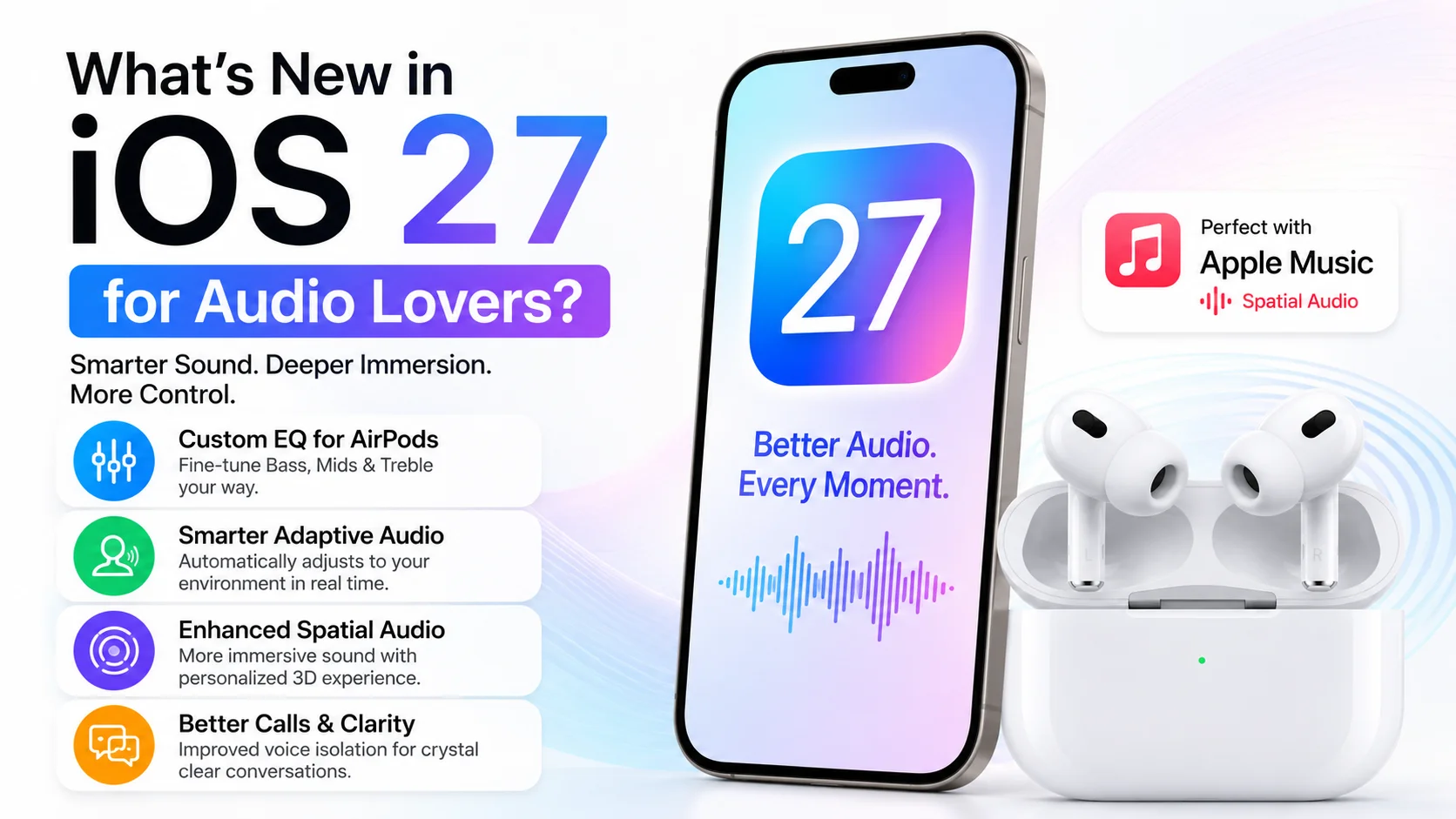
For years, Apple has focused heavily on improving the audio experience across the iPhone, AirPods, Apple Music, Apple TV, and the broader Apple ecosystem. While many software updates primarily introduce visual changes, iOS 27 stands out because it brings meaningful upgrades for music lovers, podcast listeners, movie enthusiasts, gamers, and AirPods users.
From long-awaited custom EQ controls and improved AirPods settings to deeper Spatial Audio integration and smarter audio personalization, iOS 27 may be one of the most significant audio-focused updates Apple has released in recent years.
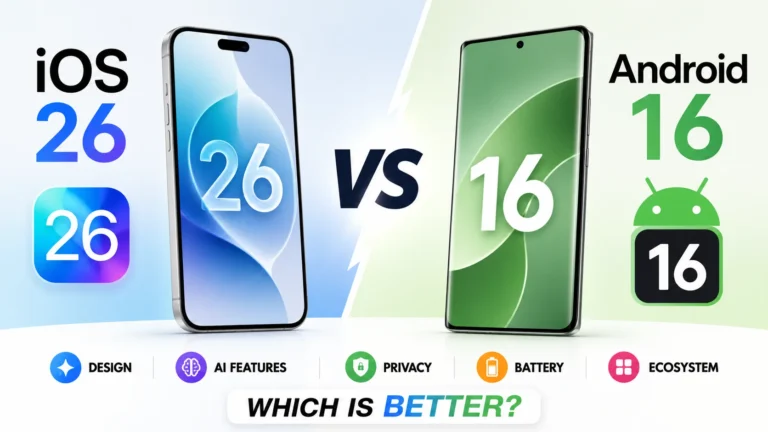
At the same time, Android manufacturers continue pushing technologies such as LDAC, aptX Adaptive, Snapdragon Sound, and Hi-Res Audio. This creates an interesting competition between Apple’s ecosystem-driven approach and Android’s codec-focused strategy.
In this guide, we’ll explore every major audio feature in iOS 27, compare Apple’s approach with Android, and examine what these upgrades mean for everyday users.
Why iOS 27 Matters for Audio Users
Most smartphone users spend hours every day consuming audio content.
Whether it’s:
- Apple Music
- Spotify
- YouTube Music
- Podcasts
- Audiobooks
- Movies
- Gaming
- Video calls
audio quality has become just as important as display quality and camera performance.
Apple’s goal with iOS 27 appears to be making audio more personalized, intelligent, and easier to control.
Instead of focusing exclusively on hardware upgrades, Apple is using software to improve the listening experience for millions of existing devices.
Custom AirPods EQ Finally Arrives
One of the most requested AirPods features has finally arrived.
For years Android earbuds offered:
- Bass adjustment
- Treble adjustment
- Sound profiles
- Graphic equalizers
Meanwhile Apple users had limited audio customization.
iOS 27 changes that.
Users can now adjust:
- Bass frequencies
- Mid frequencies
- Treble frequencies
through a dedicated AirPods equalizer interface.
Why This Matters
Different listeners prefer different sound signatures.
Some users prefer:
- Deep bass
- Strong vocals
- Bright treble
- Balanced sound
The new custom EQ allows AirPods owners to personalize sound without relying on third-party apps.
Android Comparison
Android has traditionally led this category.
Many Android brands including Sony, Samsung, OnePlus, Nothing, and Xiaomi have offered customizable EQ controls for years.
With iOS 27, Apple finally closes one of the biggest gaps between AirPods and premium Android earbuds.
Redesigned AirPods Control Center
AirPods have evolved dramatically.
Modern AirPods now include:
- ANC
- Transparency Mode
- Adaptive Audio
- Spatial Audio
- Conversation Awareness
- Hearing Features
- Find My
- Battery Monitoring
Managing all these settings previously required navigating multiple menus.
iOS 27 introduces a redesigned AirPods settings experience that centralizes controls and improves usability.
For power users, this is one of the most practical upgrades in the entire update.
Spatial Audio Continues to Improve
Apple remains heavily invested in Spatial Audio.
Unlike traditional stereo sound, Spatial Audio creates a three-dimensional listening environment.
Users experience:
- Greater immersion
- Better movie audio
- More realistic music playback
- Improved gaming sound
Apple Music continues expanding Dolby Atmos support across its catalog.
Personalized Spatial Audio
Personalized Spatial Audio uses measurements of the user’s ears and head to create a customized sound profile.
Benefits include:
- Better sound placement
- Improved realism
- More accurate directional cues
- Enhanced immersion
Android Comparison
Android manufacturers typically focus on:
- Dolby Atmos
- DTS:X
- LDAC
- Hi-Res Audio
Apple instead focuses on:
- Head tracking
- Personalized audio
- Ecosystem integration
- Spatial Audio optimization
The result is a different philosophy.
Android often prioritizes technical specifications.
Apple prioritizes user experience and consistency.
Dynamic Head Tracking
Dynamic Head Tracking continues to be one of Apple’s most unique features.
Using sensors inside compatible AirPods, the system tracks head movement and adjusts audio positioning in real time.
The effect is particularly noticeable when:
- Watching movies
- Playing games
- Viewing spatial content
Few Android audio ecosystems currently offer the same level of integration.
Adaptive Audio Gets Smarter
Adaptive Audio automatically adjusts listening modes based on surroundings.
Instead of manually switching between:
- ANC
- Transparency
- Normal listening
the system continuously adapts.
Benefits include:
- Better commuting experience
- Easier conversations
- Improved awareness
- Reduced distractions
AirPods Pro 3 users benefit particularly from these improvements.
Android Comparison
Many Android earbuds offer adaptive noise cancellation.
However, Apple’s advantage comes from combining:
- AirPods
- iPhone
- Apple Intelligence
- Audio processing
within a single ecosystem.
Conversation Awareness Improvements
Conversation Awareness automatically lowers media volume when users begin speaking.
This creates a natural listening experience.
Instead of:
- Removing earbuds
- Pausing audio
- Starting a conversation
users simply begin speaking.
The system handles the rest automatically.
This feature may seem small, but it significantly improves daily convenience.
Better Apple Music Integration
Apple Music continues to be one of the biggest beneficiaries of iOS audio improvements.
Key features include:
- Spatial Audio
- Dolby Atmos
- Personalized recommendations
- Audio quality controls
- Improved playback management
Apple’s ecosystem advantage becomes obvious here.
Hardware, software, and streaming services work together seamlessly.
What About Lossless Audio?
Lossless audio remains one of the most debated topics among audio enthusiasts.
Apple Music supports:
- Lossless Audio
- High-Resolution Lossless Audio
- ALAC formats
However, wireless AirPods still primarily use AAC over Bluetooth.
Android’s Advantage
Many Android devices support:
- LDAC
- aptX HD
- aptX Adaptive
- Snapdragon Sound
These technologies often provide higher wireless bandwidth than Apple’s AAC implementation.
This remains one area where Android enthusiasts frequently argue that Android has the advantage.
Apple’s Strategy
Apple appears more focused on:
- Spatial Audio
- Personalization
- Immersion
rather than pursuing wireless lossless audio as aggressively as some competitors.
Improved Voice Calls and Communication
Audio isn’t only about music.
Millions of users rely on AirPods for:
- FaceTime
- Voice calls
- Meetings
- Voice messages
iOS 27 continues improving:
- Voice isolation
- Background noise reduction
- Speech clarity
This creates better communication experiences in noisy environments.
Better Audio for Fitness Users
AirPods have become fitness devices as much as audio devices.
New integrations make workouts more immersive through:
- Personalized audio
- Smarter controls
- Better workout experiences
The combination of AirPods Pro 3 and iOS 27 creates one of the most advanced fitness audio platforms available.
Gaming Audio Improvements
Mobile gaming continues growing rapidly.
Audio plays a major role in:
- Competitive shooters
- Racing games
- RPGs
- Multiplayer games
Features such as:
- Spatial Audio
- Low-latency processing
- Head tracking
can create more immersive gaming experiences.
Accessibility Improvements
Apple remains one of the industry leaders in accessibility.
Audio-related accessibility features continue expanding through:
- Hearing assistance
- Sound recognition
- Voice enhancements
- Personalized listening profiles
These features help make technology accessible to a wider audience.
iOS 27 vs Android 17 for Audio Lovers
Where iOS 27 Wins
- Better ecosystem integration
- Superior Spatial Audio implementation
- Dynamic Head Tracking
- Personalized Spatial Audio
- Adaptive Audio
- AirPods integration
- Consistent user experience
Where Android Wins
- More Bluetooth codecs
- Better wireless Hi-Res support
- More hardware variety
- Greater audio customization
- Wider headphone compatibility
Which Is Better?
If you primarily use:
- iPhone
- AirPods
- Apple Music
then iOS 27 offers one of the best integrated audio experiences available.
If you prioritize:
- Hi-Res Audio
- LDAC
- Advanced codec support
- Hardware flexibility
Android remains extremely competitive.
Who Should Upgrade to iOS 27?
iOS 27 is particularly valuable for:
- AirPods Pro 3 owners
- Apple Music subscribers
- Podcast listeners
- Frequent travelers
- Fitness enthusiasts
- Movie lovers
- Mobile gamers
The update enhances nearly every aspect of audio consumption.
iOS 27 may not introduce a revolutionary new audio format, but it significantly improves the everyday listening experience. The addition of custom AirPods EQ, redesigned audio controls, improved Spatial Audio experiences, Adaptive Audio enhancements, and tighter AirPods integration makes this one of the most important updates for Apple audio users in years.
While Android continues to lead in codec flexibility and wireless Hi-Res audio support, Apple’s strength remains ecosystem integration. Rather than chasing specifications, Apple focuses on making audio smarter, simpler, and more personalized.
For AirPods Pro 3 owners, Apple Music subscribers, and users invested in the Apple ecosystem, iOS 27 delivers meaningful improvements that make daily listening more enjoyable, immersive, and customizable than ever before.